About us
Musicians’ impressions
Three musicians tell us about their path to music and their time in the SDO.
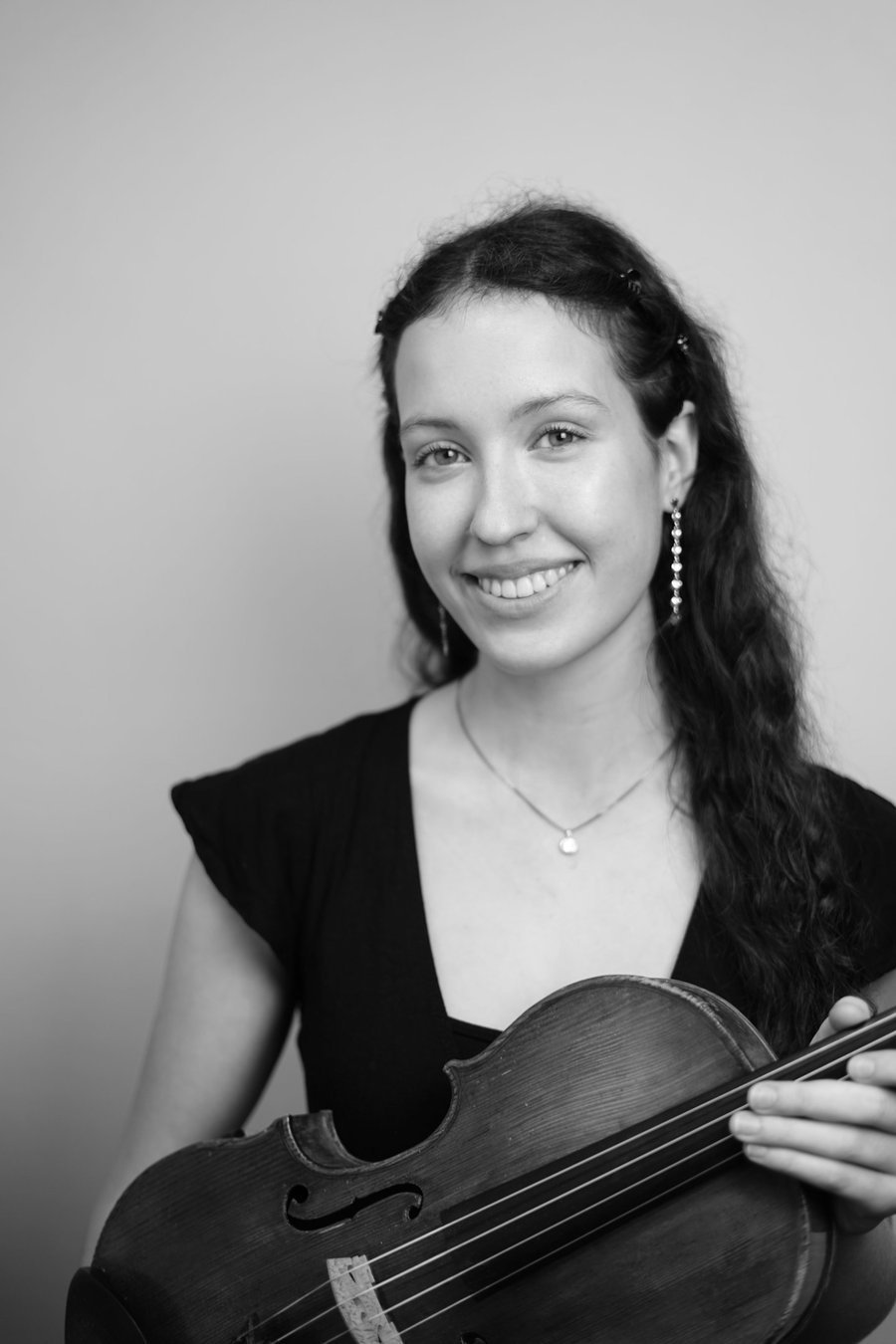
Anna Ringger
Viola
Who are you, and what has your musical journey been – experiences, competitions?
My name is Anna Ringger. I started playing the violin and the piano at the age of five. At 13 I switched to the viola, because its deep sound and its role in the ensemble had always appealed to me in a special way. Over the years I have been fortunate to gather many different experiences, as a soloist as well as in ensembles and orchestras.
I have won first national prizes several times at “Jugend musiziert”, both in the solo category and in chamber music line-ups. These competitions gave me a great deal musically, and also showed me how intense and enriching working with other musicians can be. Working with orchestras has also shaped my musical path. Among others, I was active as a section leader in the Landesjugendorchester (LJO), the Junges Kammerorchester Stuttgart (JuKO) and the Bundesjugendorchester (BJO). The concert tours took us from Denmark, England and Romania as far as Australia.
I have already had the chance to play in renowned halls such as the Concertgebouw Amsterdam, the Elbphilharmonie Hamburg, the Musikverein in Vienna and the Berliner Philharmonie.
Why is classical music important and relevant, also for the future?
For me, classical music is a language that connects people across generations. Even though many works were written centuries ago, they address themes that are just as relevant today – emotions, conflicts, questions of identity or hope. In an age that is often marked by speed and sensory overload, classical music offers something quite different: calm, depth and the chance to really listen – both to the music and to oneself. I believe that is exactly why it will remain important in the future. It keeps developing, inspires new generations and creates connections, regardless of age or background.
Why do you enjoy being part of the SDO?
I enjoy being part of the Süddeutsches Sinfonieorchester because it gives me the chance to be part of a committed and professional ensemble. The combination of demanding music and a motivated community makes the work here particularly exciting and rewarding. It is simply fun to bring great works to the stage together, to keep developing as we do so, and to gain valuable orchestral experience.
What sets the SDO apart, and what do you value about the work?
The SDO is distinguished above all by its high musical quality and its professional work and organisation. Here the emphasis is not only on excellent music-making but also on an atmosphere in which every individual musician is respected and encouraged. I particularly value the clear structure and the focus on precision, which enable us to perform expressively as an orchestra. At the same time, our shared passion for music binds us together, which makes working in the SDO special.
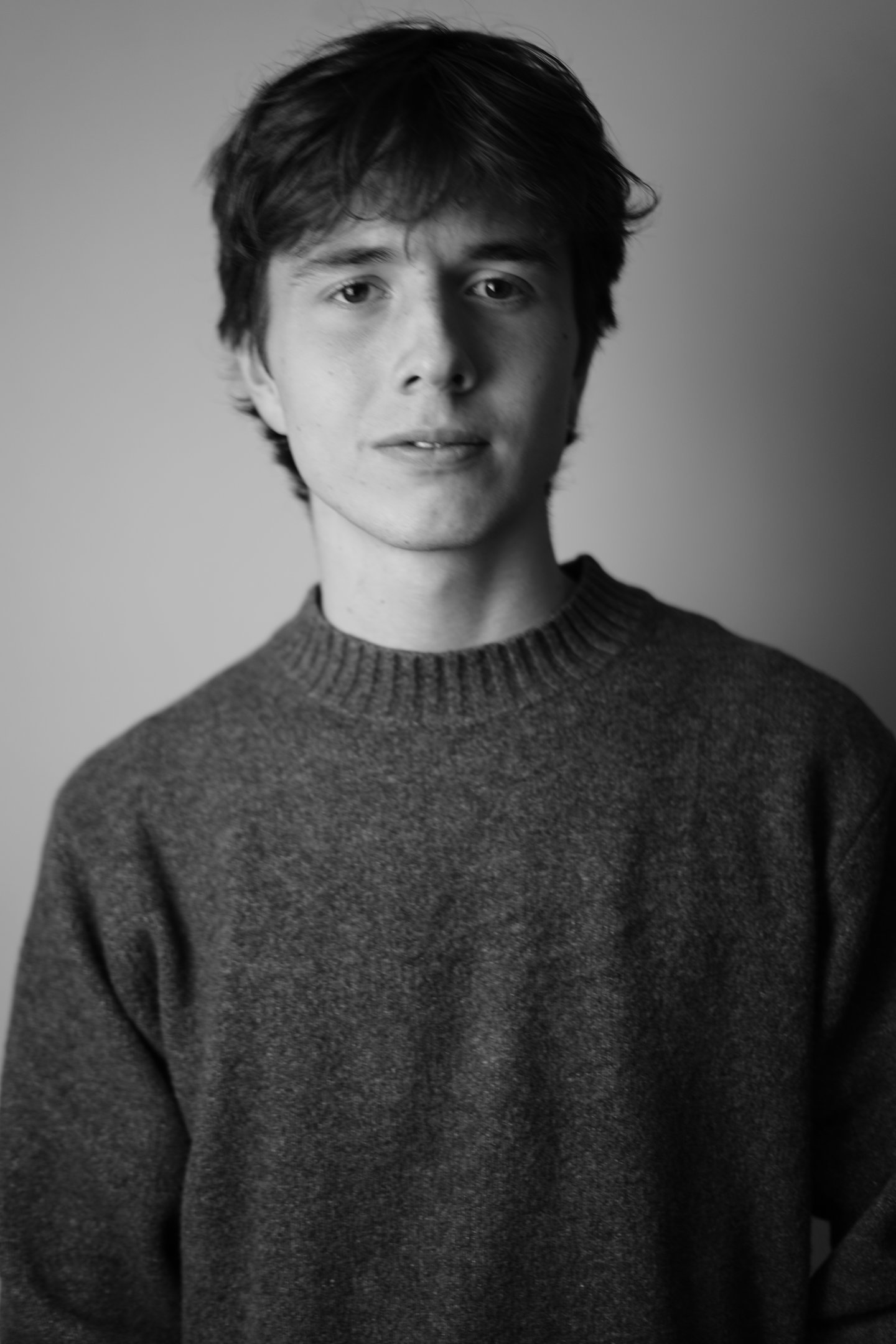
Marc Strokov
Cello
My name is Marc Strokov, I am 17 years old, I come from Stuttgart and I play the cello. What fascinates me most about the instrument is its range – you can play high and low, you can sing with it or really dig in, play virtuosically or very intimately. I am also very interested in different tone colours, and I am delighted to play the cello and to keep discovering new colours. I also like playing in different formations; for example, I play regularly in a piano trio, but also solo and in the orchestra.
I have taken part successfully in a wide variety of competitions, including abroad. The best known is probably “Jugend musiziert”, which I enter every year, and will again next year. Last year, at the national competition, I achieved the maximum score in four different categories and won a first national prize. What I like about the competition is that you can make music together with your friends, but also that you have a goal in sight and it is not about comparing yourself with each other.
Through the various orchestras I play in, such as the Bundesjugendorchester or the JuKO Stuttgart, and through competitions as well, I have already been able to travel the world with my cello, for example to America, Australia, Vienna and England.
The Süddeutsches Sinfonieorchester feels like a family. Friends from home, but also from all over, keep coming together for a time to make music together. The atmosphere is very friendly and warm, and you sense everywhere how glad everyone is that you are there and that, above all, it is about making beautiful music. We also have plenty of opportunities to do other things outside rehearsals, which rounds everything off very smoothly. Another special thing about this orchestra is that so many different groups meet – there are no age limits or anything of the kind, and professional musicians from very well-known orchestras often play with us too. You can learn a great deal, including about working efficiently, about the music and about life. Because the orchestra is relatively young, nothing feels strict in an authoritarian sense; it feels more as if we are all working together to make the result as good as possible.
What sets the SDO apart for you?
I was there from the very beginning, when we still had a different name and the aim was not to have a large symphony orchestra. But it all developed fairly quickly, right up to the Süddeutsches Sinfonieorchester. That came as something of a surprise to all of us, but each of us also felt that something very special was coming into being here. At the start the idea was simply to organise small concerts in Stuttgart, whether chamber music or small solo concerts with orchestra, where I was already able to perform a number of works. It began in small churches, and not even a year later it had developed so far that we were playing in the Beethovensaal of the Liederhalle Stuttgart, to very big applause. What sets the SDO apart for me is simply this youthful energy to try things out and do something a little differently, while always putting quality first. Simply being part of this project is something very beautiful, and you can really feel that everyone is pleased about every single person who is there – no matter where you come from.
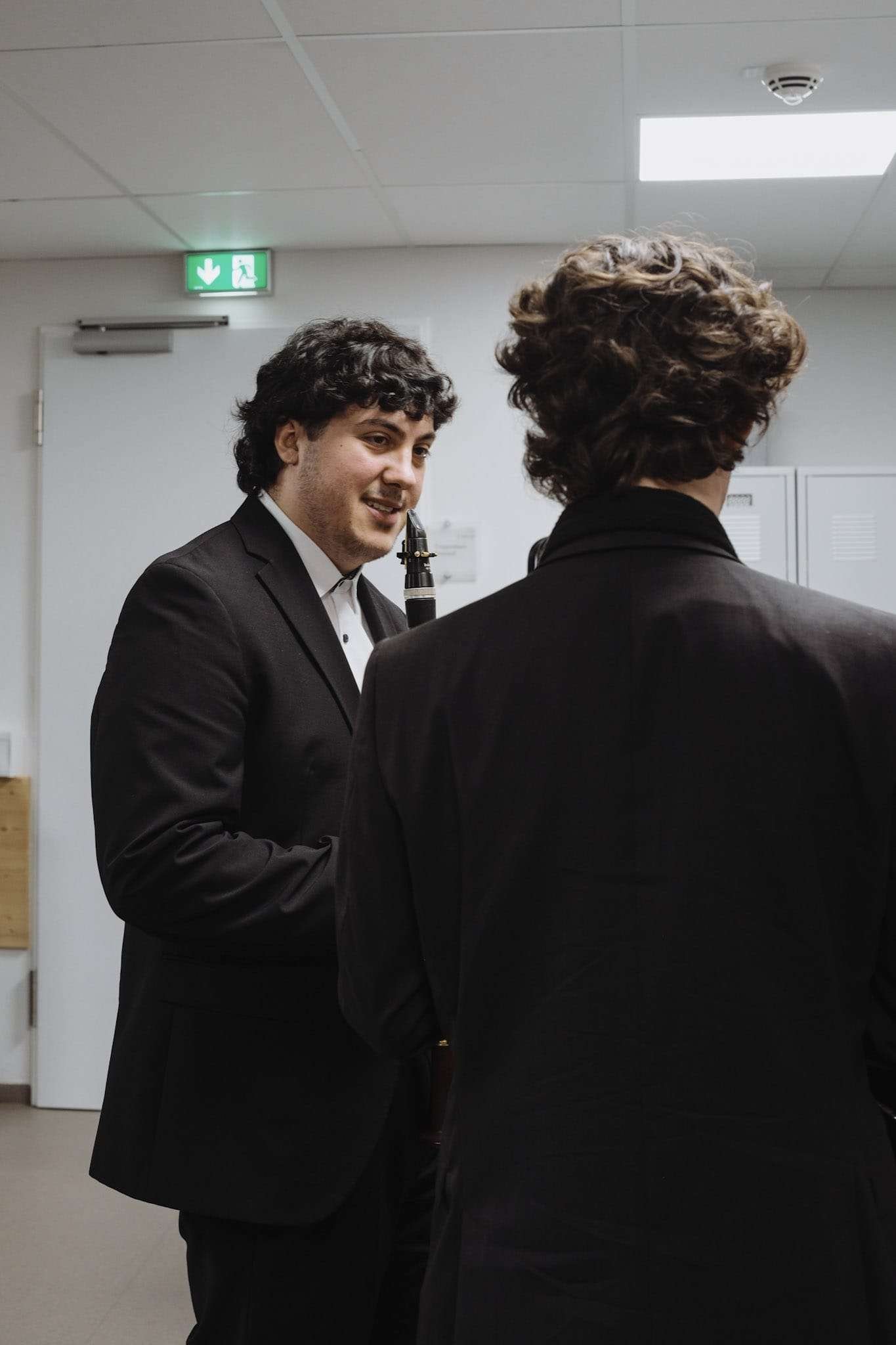
Julian Menonna
Clarinet
My name is Julian, I am 22 years old and I play the clarinet. In year five at school, every pupil was assigned an instrument. The clarinet was only my third choice at the time. Over time, however, I developed a great passion for this instrument and for classical music as a whole. I gained my first experience of ensemble playing in the Jugendphilharmonie Ludwigsburg and in a chamber music line-up as part of a clarinet trio (clarinet, cello and piano). With this trio I won a national prize at Jugend musiziert, at my very first attempt, in the category "Besondere Ensembles" (special ensembles). I am currently principal clarinettist in the symphony orchestra of the Stuttgarter Liederkranz and also play in the Süddeutsches Sinfonieorchester. My musical highlights include a solo concert with Carl Maria von Weber’s first clarinet concerto, a concert tour to Brno (Czech Republic) and a concert in the Herkulessaal with Mahler’s Ninth Symphony. I am taught by Frank Bunselmeyer, clarinettist at the Staatsoper and the Staatsorchester Stuttgart.
What do you find special about the SDO?
What I particularly value about the SDO is that young musicians are given the chance to play demanding works in important concert halls. This creates an extraordinary community, which I have rarely experienced in this form in any other orchestra. The musicians in the SDO are very ambitious and, above all, combine professionalism with genuine joy in making music together. You enjoy the time, yet you are also very serious about the work; you can feel the appreciation for every individual musician, and our conductor’s inspiring approach demands a lot of us, but also inspires us to give our very best.
What role does music play for you?
Music plays a central role in my life. Unlike most of the musicians in the SDO, I am not studying music: I am in the fifth semester of a psychology degree and work part-time in a nursery. Making music is therefore not a profession for me but a passionate hobby, and at the same time an important counterbalance to the demands of study and work, as well as a valuable means of artistic expression.
As of October 2025